Contemporary Painting

Paintings in the contemporary era of the Philippines are a vibrant, diverse field blending traditional cultural narratives with modern social commentary, globalization, and varied mediums. Key themes in their paintings are social injustice, identity, history, lifestyle, and feelings of the artist using abstraction, expressionism, and surrealism.

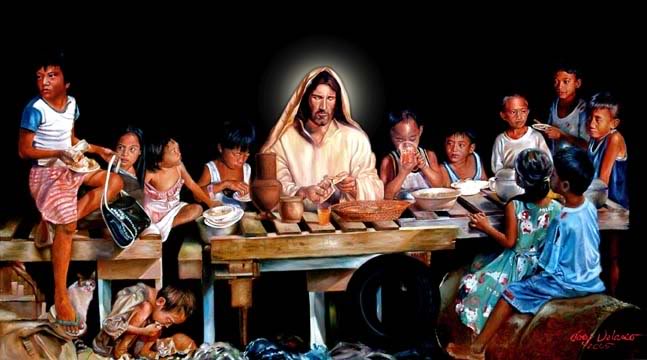
Hapag ng Pag-asa (Table of Hope)

Artist: Joey Velasco
Year Created: 2005
Medium: Oil on canvas

Joey Velasco’s Hapag ng Pag-asa takes the classic Last Supper scene, replaces the biblical apostles with real street children, and creates a deeply moving social statement. The powerful painting shows Christ breaking bread with malnourished kids, features subtle Manila backgrounds, and uses warm but shadowy lighting. This artwork breaks away from traditional holy pictures, ignores wealthy or idealized subjects, and brings divine themes straight into the modern slums. By painting actual impoverished children, capturing their hungry expressions, and placing them at the table, the artist highlights the harsh reality of extreme poverty, questions our society's priorities, and demands immediate compassion for the youth. Ultimately, the piece forces viewers to confront everyday inequality, to rethink their own blessings, and to recognize human dignity in the poorest members of our community.

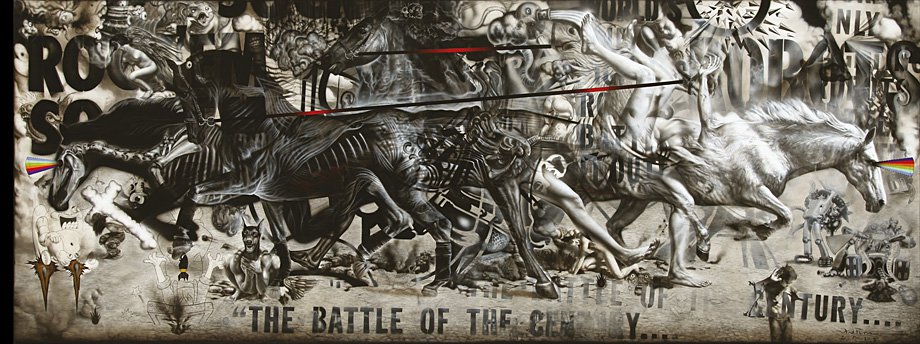
Grayground

Artist: Ronald Ventura
Year Created: 2011
Medium: Graphite, oil, and acrylic on canvas

Ronald Ventura’s Grayground takes incredibly realistic pencil drawings, mixes them with edgy street graffiti, and creates a massive, eye-catching scene. The huge painting shows wild horses charging forward, reveals ghostly shadows fading away, and features bare skeletons breaking apart. This artwork breaks the old rules of painting, ignores traditional gallery styles, and builds a wild playground of clashing ideas. By layering simple sketches, smooth oil paints, and bright acrylics, the artist captures the fast pace of modern life, reflects the heavy history of the Philippines, and highlights our beautifully complicated culture. Ultimately, the piece invites everyday viewers to explore the chaos, to question the future, and to feel the raw energy of Filipino contemporary art.

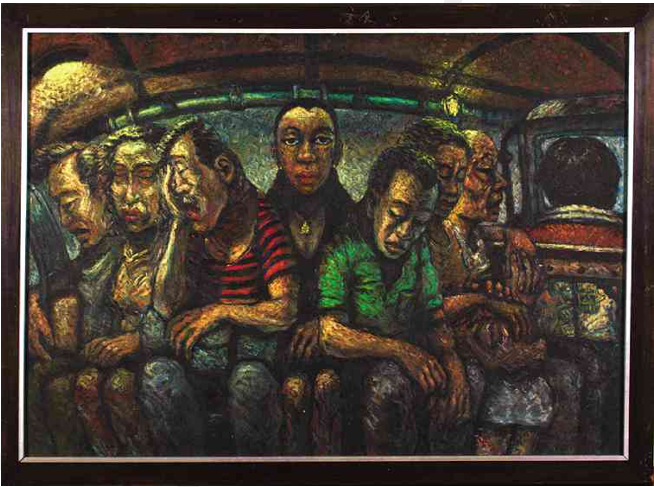
Last Trip

Artist: Mark Justiniani
Year Created: 1990
Medium: Oil on canvas

Mark Justiniani’s Last Trip acts as a direct eyewitness account of urban life, captures the exhausting daily commute, and honors the Filipino working class. The moody painting displays weary passengers sleeping inside a dimly lit jeepney, features a curved "wide-angle" perspective to pull the viewer inside the vehicle, and uses one central staring figure to directly confront the audience. This Social Realist masterpiece steps away from romanticized subjects, focuses on the gritty truth of the streets, and reflects the collective struggle of ordinary citizens. By placing the viewer right in the middle of the crowd, utilizing a dark atmospheric palette, and freezing a moment of vulnerability, the artist exposes the grueling sacrifices made just to survive. Ultimately, the piece urges audiences to acknowledge the unseen labor, to feel the heavy weight of city life, and to respect the quiet resilience of the masses.

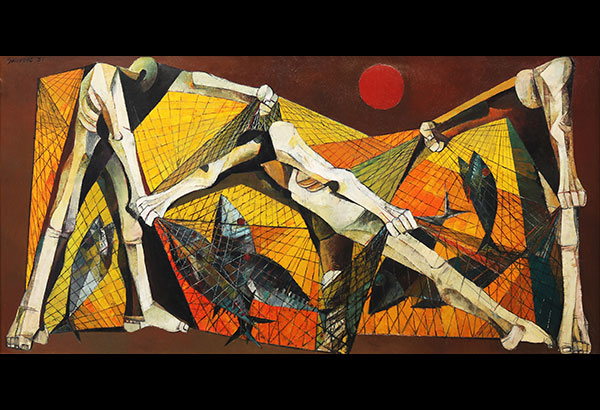
Fishermen

Artist: Ang Kiukok
Year Created: 1981
Medium: Oil on canvas

Ang Kiukok’s Fishermen uses a bold cubist-expressionist style, displays three men hauling a heavy net, and captures a dynamic morning on the water. The striking oil painting features sharp geometric shapes to inspire movement, utilizes strong lines to emphasize their physical power, and relies on intense colors to reflect their daily struggles. This artwork steps away from peaceful seascapes, focuses on the pure brawn of the workers, and serves as a symbol of constancy for the Philippine working class. By highlighting their gripping hands, showing a net full of fish, and freezing a moment of powerful action, the artist honors the exhausting labor of ordinary Filipinos. Ultimately, the piece urges the audience to see their physical effort, to respect their daily grind, and to recognize the true cost of survival at sea.

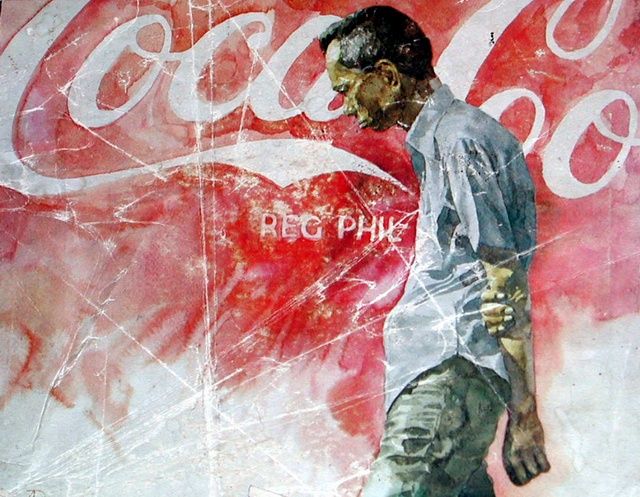
Itak sa Puso ni Mang Juan

Artist: Antipas Delotavo
Year Created: 1978
Medium: Watercolor on Paper

Antipas Delotavo’s Itak sa Puso ni Mang Juan captures a weak slouching man, features a graffiti-style Coca-Cola logo, and creates a powerful image of corporate dominance. The striking painting displays a distressed worker in a blue polo, shows a dagger-like letter 'C' pointing directly at his heart, and uses red splatters to emphasize the gritty street wall background. This Social Realist artwork rejects glamorous subjects, exposes the quiet submission of local laborers, and highlights the crushing weight of influential capitalist businesses. By painting his natural tan features, portraying his exhausted posture, and contrasting him against a massive global brand, the artist perfectly represents the oppressed Filipino worker. Ultimately, the piece urges us to notice these everyday struggles, to question foreign corporate power, and to defend the dignity of the common man.